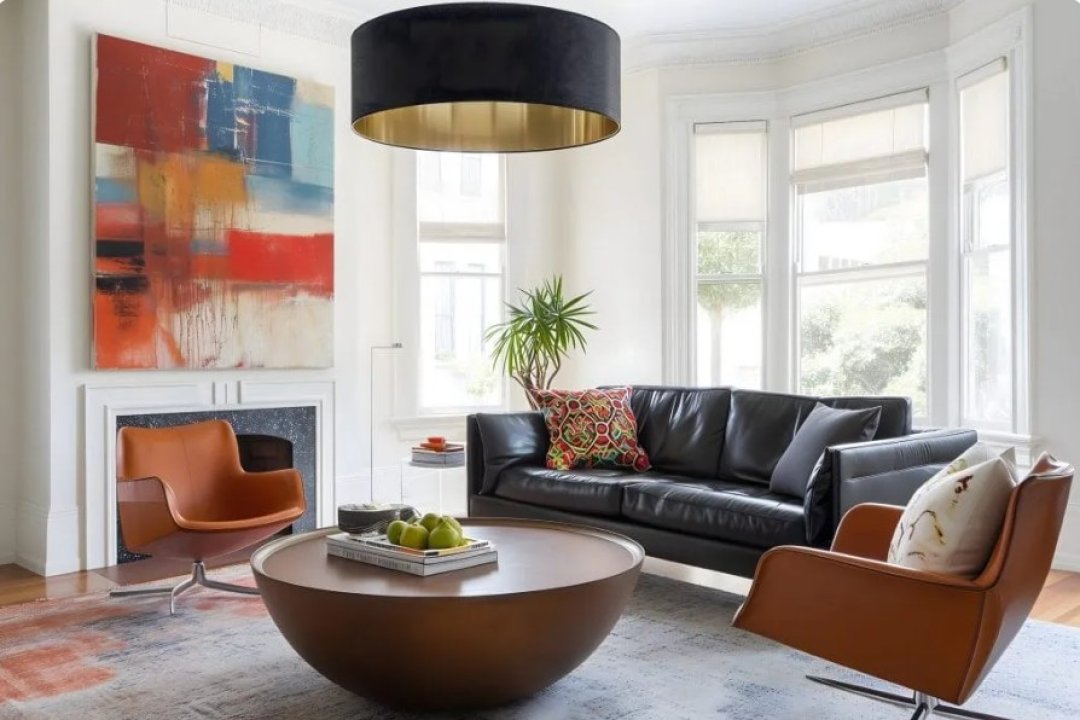
Furniture layout in living room design directly influences spatial perception and comfort. This guide explains how professional interior planning achieves balance through thoughtful placement.
Living room design gains meaning not only through selected furniture, but through how these elements are positioned within the space. A professional furniture layout reveals the architectural potential of the interior while creating a comfortable usage scenario.
Reading the Architecture
The first step in layout planning is understanding the architectural characteristics of the space. Window placement, natural light direction, circulation paths, and focal points guide layout decisions. Furniture should work with the architecture, not against it.
Establishing a Focal Point
Every living room requires a visual center. This may be a view, an architectural feature, or a spatial void. Furniture placement should reinforce this focal point. Random arrangements weaken spatial cohesion.
Circulation and Flow
Professional layouts clearly define circulation paths. Furniture must not obstruct movement, allowing natural flow throughout the space. This flow preserves both functionality and visual clarity.
Scale and Negative Space
A common mistake in layout design is attempting to fill the entire area. Negative space is an active design element. Properly allocated empty areas enhance furniture presence and allow the room to breathe.
Functional Grouping
Different functions within a living room are articulated through furniture grouping. Seating, relaxation, and social interaction zones should be defined subtly, without rigid boundaries. This approach creates layered spatial depth within a single volume.
In conclusion, furniture layout in living room design requires spatial awareness rather than intuition alone. When professional balance is achieved, the living room becomes both visually compelling and enduringly comfortable.