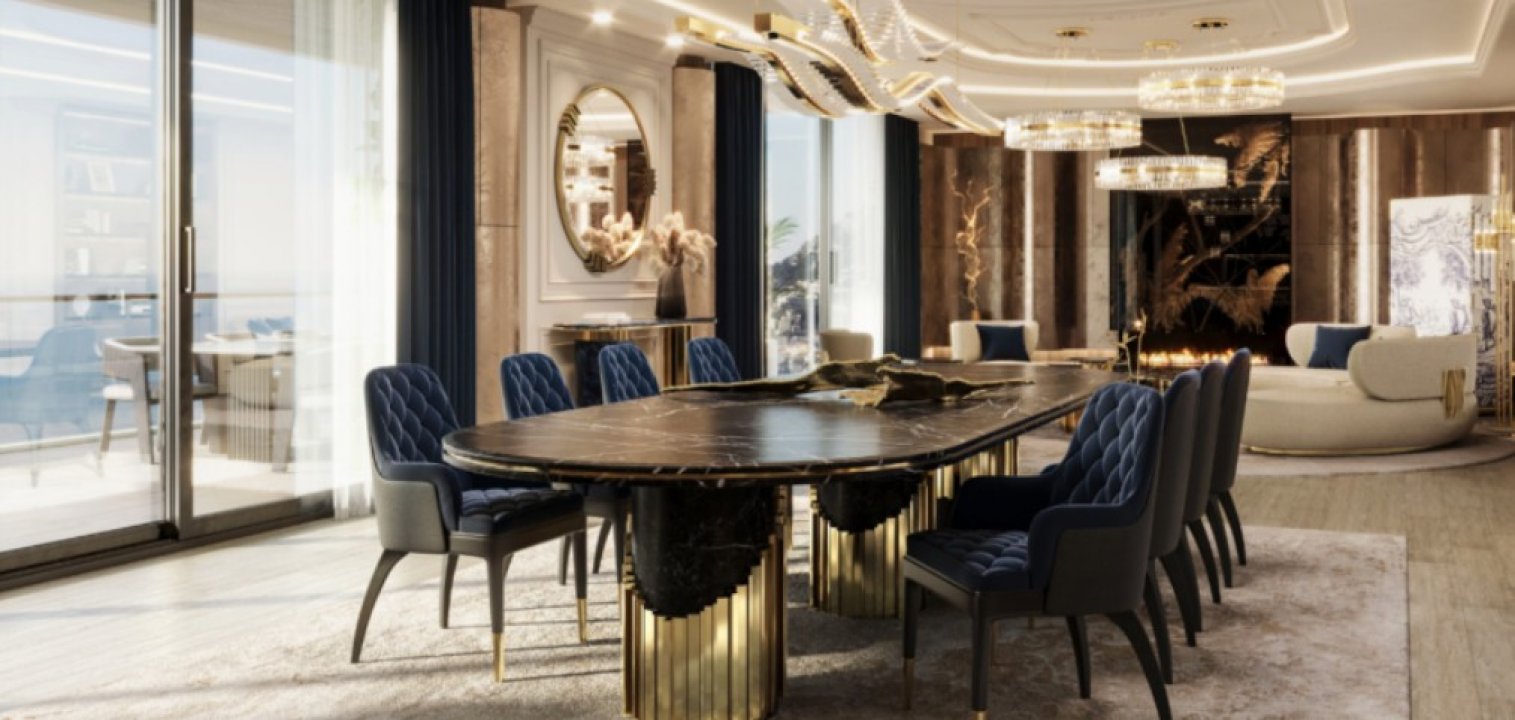
Dining room design in luxury homes relies on proportion, material harmony, and spatial continuity. This guide outlines the core principles behind timeless, high-end dining spaces.
In luxury homes, the dining room is more than a functional area; it represents social interaction and spatial identity. A well-designed dining space should align with the architectural language of the residence while offering a timeless atmosphere.
Spatial Position and Flow
The location of the dining room should be evaluated in relation to the kitchen and living areas. Transitions must feel natural, avoiding visual or functional disconnection. In open-plan layouts, the dining area should be defined without fragmenting the space.
Table Scale and Proportion
The size of the dining table must correspond to the volume of the room. Oversized tables overwhelm the space, while undersized pieces diminish its potential. Proper proportion ensures both visual balance and comfortable use.
Chair Comfort and Ergonomics
Ergonomics in dining rooms should support extended seating. Chair back angles, seat height, and overall balance influence the perceived quality of the space. Comfort functions as a subtle indicator of luxury.
Material and Surface Harmony
Materials define the character of a dining room. When wood, marble, and metal are balanced thoughtfully, they create a refined cohesion. Excessive gloss should be avoided in favor of controlled, tactile finishes.
Lighting and Atmosphere
Lighting above the dining table serves as the focal element of the space. Light intensity must be controlled and visually connected to the table. Proper lighting enhances both the inviting and architectural qualities of the dining area.
In conclusion, dining room design in luxury homes is a balanced process that integrates aesthetics, ergonomics, and spatial awareness. When executed correctly, the dining area becomes a refined and enduring living environment.