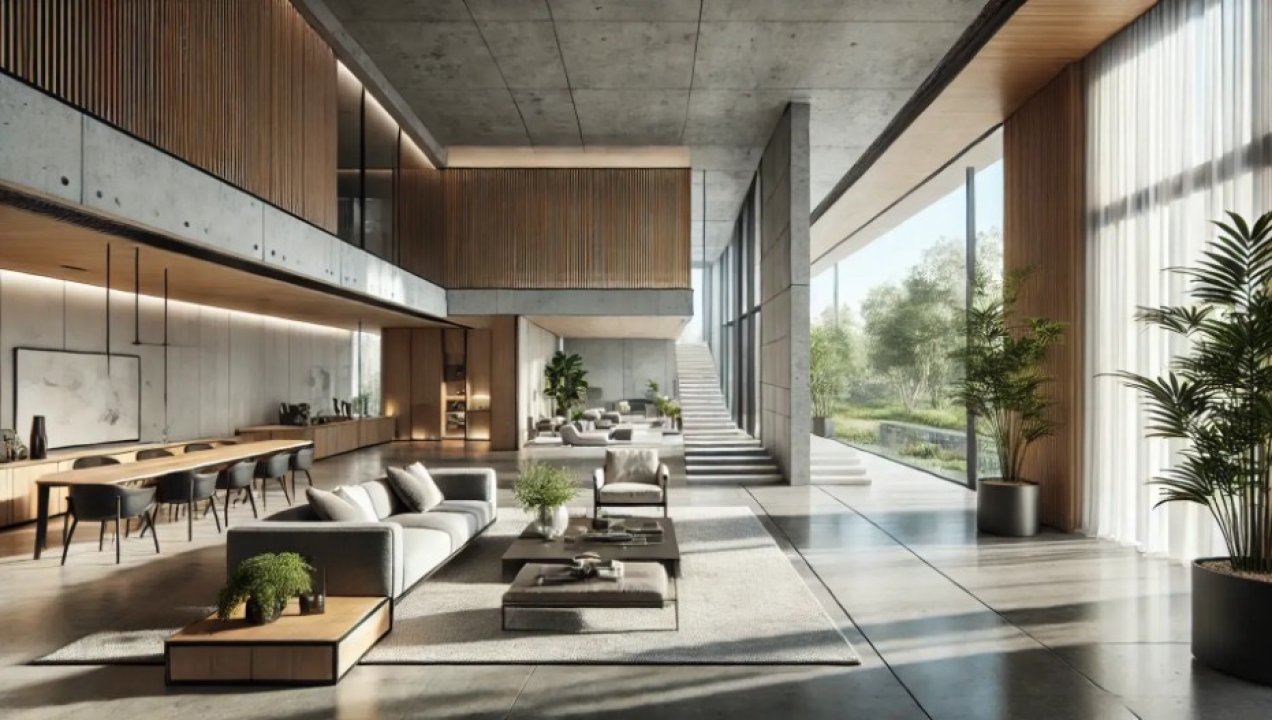
Furniture selection in villa interiors requires more than style; it demands an understanding of scale, proportion, and spatial planning. This guide explains the core principles for furnishing expansive living spaces.
In villa interiors, furniture scale and spatial planning must be approached differently from standard residential spaces. Large volumes, high ceilings, and open layouts require furniture to function as an architectural element rather than a purely decorative one.
Proper scale in villa interiors is not about filling space, but defining it. Furniture that is too small can feel insignificant in expansive volumes, while oversized pieces may disrupt circulation. Scale must be evaluated in relation to ceiling height, spatial axes, and visual depth.
Circulation plays a key role in spatial planning. In villa living areas, furniture does not need to rely on walls. Central compositions can divide the space into multiple living scenarios while reinforcing architectural cohesion and controlled flow.
In open-plan villas, furniture acts as a zoning tool. Living, dining, and relaxation areas are defined without physical partitions, using proportion, placement, and balance to shape spatial perception. The goal is not emptiness, but a deliberate sense of openness.
By Selim Furniture approaches furniture scale and spatial planning in villa projects through architectural proportion, spatial hierarchy, and lifestyle-driven design. This philosophy creates interiors that feel balanced, powerful, and timeless within expansive living spaces.